Fleet Branding · Pacific Northwest
Fleet graphics, managed like a fleet.
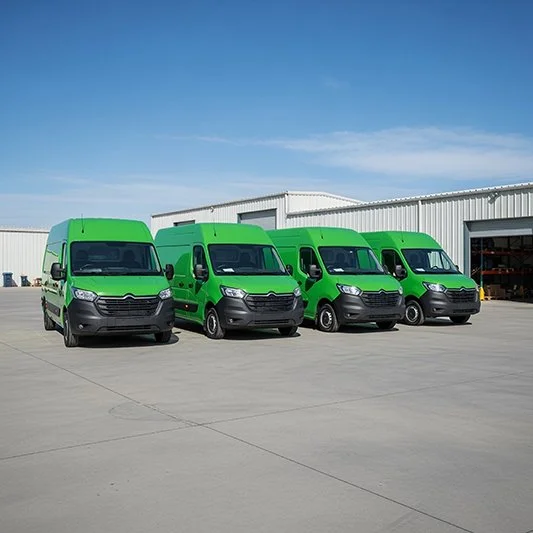
Design systems that scale from your first van to your fortieth truck. One point of contact from design to installed vehicle — vetted installers, compliance built in, and every graphic registered so your art is never lost and vehicle #14 matches vehicle #2.
$800
0
1
Saved on one install through our vetted bid process.
Wrong-size reprints - every graphic scale verified.
Point of contact from plan to install.
Sound Familiar?
Your trucks are your best ad — or your most visible problem.
-
Wrapped at different shops, different years, from different files. Customers notice — and it reads as disorganized.
-
The shop that had your logo closed, or nobody saved the files. Every new vehicle starts the design fight over again.
-
Three shops, three prices, three stories about materials and warranty — and no way to tell who's right.
-
A service van in a wrap bay isn't billing. Nobody scoped the install schedule around your work calendar.
WRAP DESIGN
Designed to be read at 60 mph.
Built to be repeated at any scale.
Most contractor wraps fail the same way: too much on the panel. On I-5, a potential customer gets about three seconds — enough to digest who you are, what you do, and how to reach you. We design to that rule, then document it as a system so every future vehicle inherits it automatically.
-
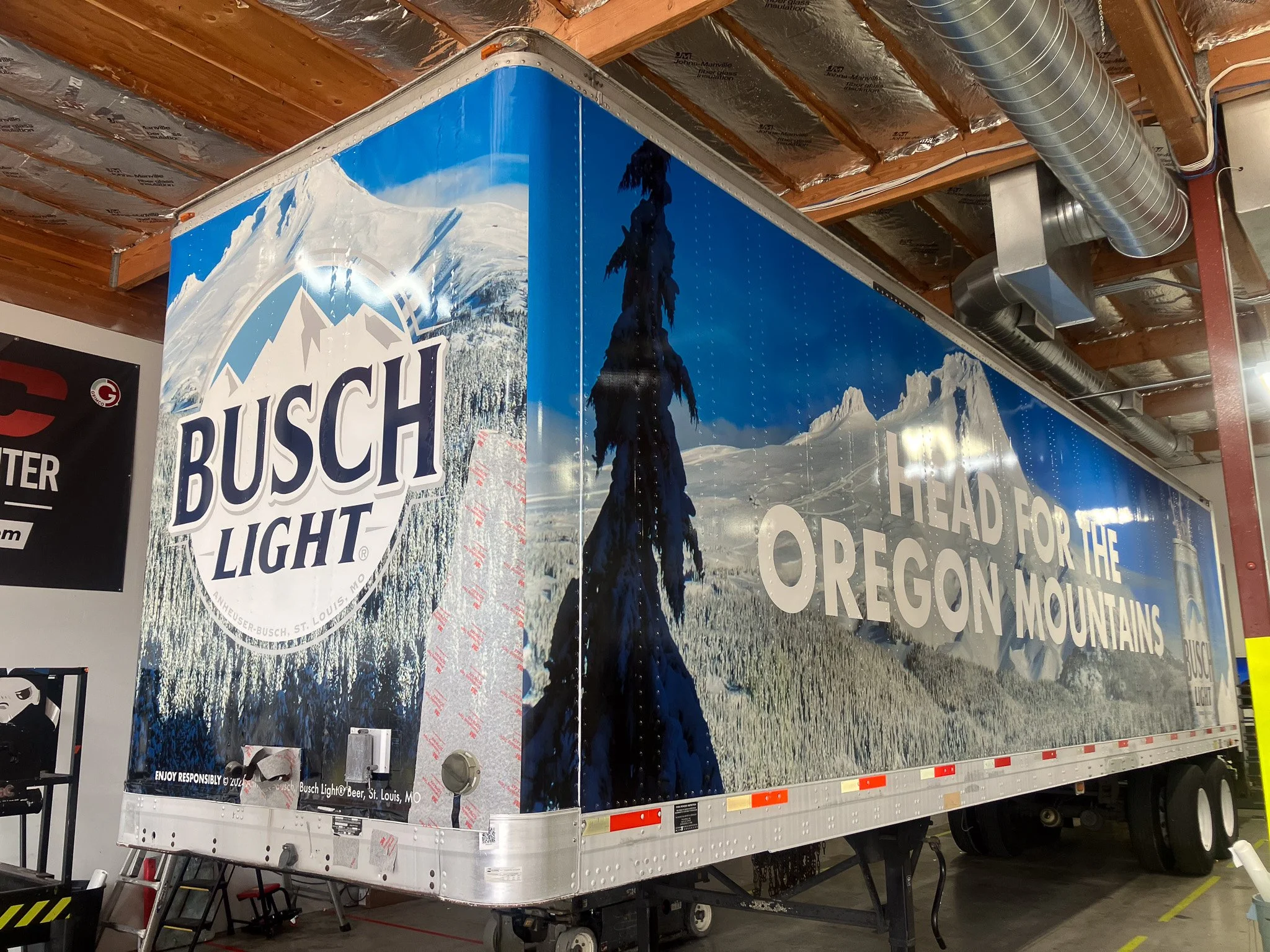
High-impact coverage on doors, tailgate, and rear panels — the surfaces customers actually see in traffic and in driveways. The budget-smart entry that still follows the system.
Logo, trade, and contact hierarchy
CCB# / compliance placement built in
Scale-verified production files
Design from $450 / vehicle
-
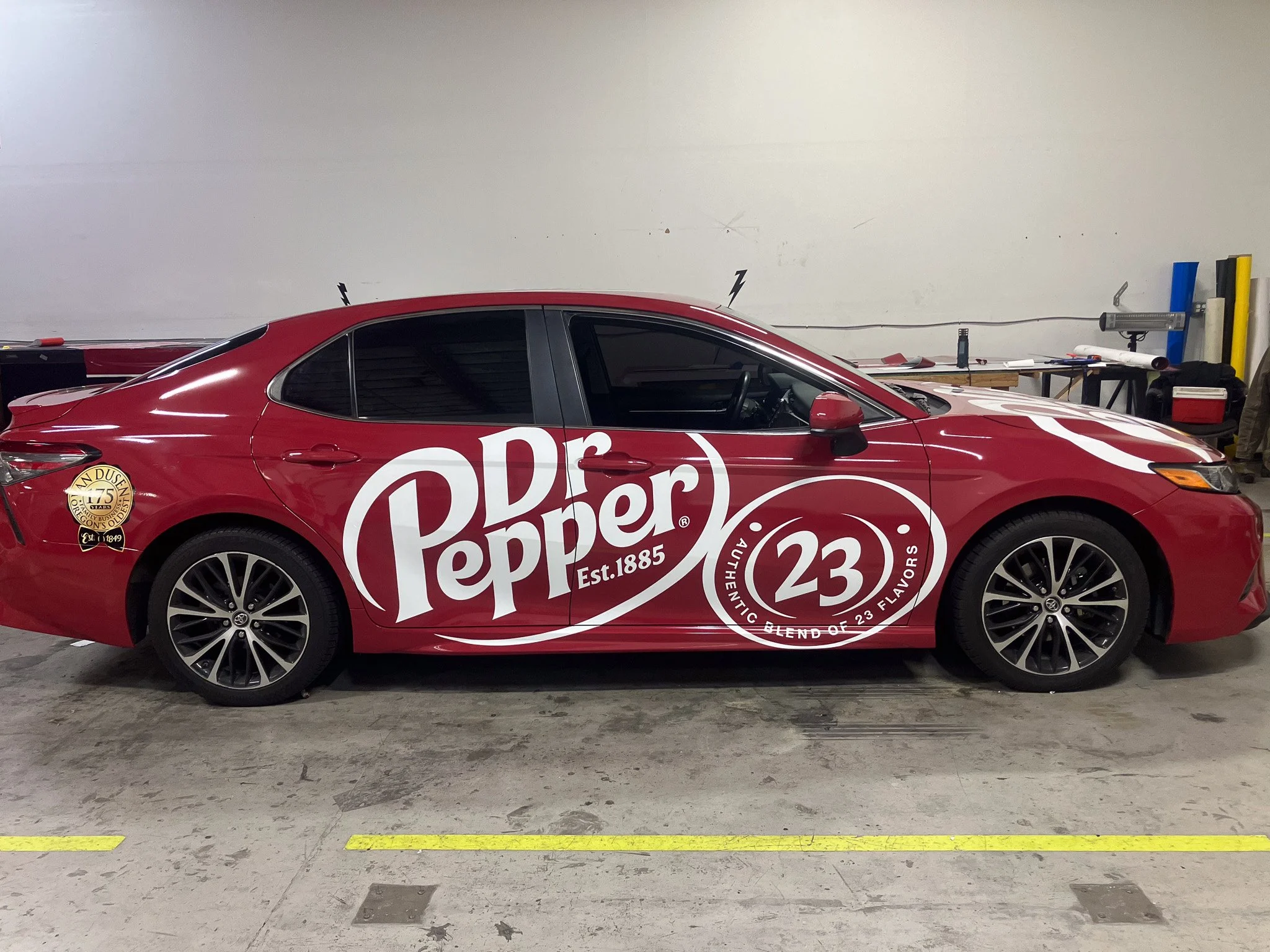
Color and graphics carry the lower half or rear two-thirds of the vehicle, blended into your paint color. Big presence, controlled install cost, faster turnaround per vehicle.
Everything in Partial
Cross-vehicle layout adaptation
Panel-by-panel install specs
Design from $750 / vehicle
-
Complete coverage plus a documented Brand Identity Guideline: colors, type, logo rules, and per-vehicle layouts — viewable online, so any shop, any year, produces the same fleet.
Everything in Half
Brand Identity Guidelines document
Online fleet registry — every graphic dimensioned & reprintable
System from $1,500

Lost your Art? Low-resolution logo?
AI concept that won’t print?
It happens to almost every trades business: the original files are gone, the logo only exists on a business card, or the "logo" is an AI image that falls apart at vehicle scale. We rebuild it as clean, editable, production-grade vector art — accurate at 6 inches or 16 feet — and register it so it can never be lost again.
Flat fee, fast turnaround, yours to keep whether or not you wrap with us.
Fleet graphics, managed like a fleet.
Design systems that scale from your first van to your fortieth truck. One point of contact from design to installed vehicle — vetted installers, compliance built in, and every graphic registered so your art is never lost and vehicle #14 matches vehicle #2.
Your trucks are your best ad — or your most visible problem.
Every truck looks different
Wrapped at different shops, different years, from different files. Customers notice — and it reads as disorganized.
The art is gone
The shop that had your logo closed, or nobody saved the files. Every new vehicle starts the design fight over again.
Quotes are all over the map
Three shops, three prices, three stories about materials and warranty — and no way to tell who's right.
Downtime is money
A service van in a wrap bay isn't billing. Nobody scoped the install schedule around your work calendar.
Designed to be read at 60 mph.
Built to be repeated at any scale.
Most contractor wraps fail the same way: too much on the panel. On I-5, a potential customer gets about three seconds — enough to digest who you are, what you do, and how to reach you. We design to that rule, then document it as a system so every future vehicle inherits it automatically.
Partial Wrap Design
High-impact coverage on doors, tailgate, and rear panels — the surfaces customers actually see in traffic and in driveways. The budget-smart entry that still follows the system.
- Logo, trade, and contact hierarchy
- CCB# / compliance placement built in
- Scale-verified production files
Half Wrap Design
Color and graphics carry the lower half or rear two-thirds of the vehicle, blended into your paint color. Big presence, controlled install cost, faster turnaround per vehicle.
- Everything in Partial
- Cross-vehicle layout adaptation
- Panel-by-panel install specs
Full Wrap Design System
Complete coverage plus a documented Brand Identity Guideline: colors, type, logo rules, and per-vehicle layouts — viewable online, so any shop, any year, produces the same fleet.
- Everything in Half
- Brand Identity Guidelines document
- Online fleet registry — every graphic dimensioned & reprintable
Lost your art? Low-res logo? AI concept that won't print?
It happens to almost every trades business: the original files are gone, the logo only exists on a business card, or the "logo" is an AI image that falls apart at vehicle scale. We rebuild it as clean, editable, production-grade vector art — accurate at 6 inches or 16 feet — and register it so it can never be lost again.
Flat fee, fast turnaround, yours to keep whether or not you wrap with us.
CCB numbers. GVW markings. Handled once, correct on every vehicle.
Vehicle graphics aren't just marketing — in the trades, they're regulated. We bake the requirements into your design system so you never think about them again, and we'll help you sort out your numbers if you're just getting registered.
| Requirement | Who it applies to | How we handle it |
|---|---|---|
| Oregon CCB # | Licensed construction contractors — Oregon requires your CCB number on your advertising, and your trucks are advertising. | Reserved placement in the layout system: correct size, legible, consistent across every vehicle. New to licensing? We'll point you through getting your CCB# squared away. |
| USDOT # & legal name | Commercial vehicles over 10,001 lbs GVWR operating across state lines (and some intrastate operators). | Marked per federal rules — legible from 50 feet — and positioned so it works with the design instead of stuck on as an afterthought. |
| GVW / GVWR declarations | Trucks and trailers where weight class drives what markings you need. | We confirm your vehicle weights during the Wrap Plan so the right markings are in the right place before anything prints. |
| Washington contractor reg. # | Registered contractors operating in Washington. | Same treatment as CCB — a designed element of the system, not a sticker slapped on later. |
We're designers and coordinators, not attorneys — requirements vary by license type, vehicle weight, and operation. We flag what applies to you and verify placement rules current at print time.
Bring us your AI art. Seriously.
Most wrap shops turn AI images away. We treat them as what they are: the clearest brief you've ever given a designer. AI can make a picture of an idea — we turn that idea into clean, editable, accurate files that are ready for production. Read the full guide →
Welcome & Receive
AI images, mood boards, napkin sketches — all welcome as inspiration and reference.
Assess & Evaluate
We identify what can be preserved and what must be rebuilt to survive print at vehicle scale.
Convert & Build
Strong ideas become professional files — accurate, editable, production-ready.
Deliver & Protect
A cleaner result now, and a registered, reusable asset your business keeps forever.
A note on AI-generated design feedback
We welcome AI at the start of the process — concepts, references, inspiration. But revision requests generated by asking an AI to "critique" or "score" finished design work are not valid revision direction, and rounds spent on them count toward your two included revision rounds.
Here's why: AI critique tools have no knowledge of print production, vehicle geometry, vinyl behavior, legibility-at-distance research, or the Wrap Plan you approved — and they will generate unlimited, contradictory opinions on request. Chasing them stalls projects and burns your budget. All feedback runs through your named Design Approver and is measured against your approved Wrap Plan. That structure is what keeps your project fast and on budget — it protects you as much as us.
Color, type, and contrast do the selling before a word is read.
Drivers form an impression of your business in seconds, and most of that first judgment is carried by color alone. Color sets the emotional read — reliability, urgency, premium, clean — before anyone processes your name. Typography then decides whether the message survives distance and speed: generous letter spacing, tall lowercase, and mixed-case text stay readable where condensed all-caps blur; it's the same science that drove the redesign of American highway signage.
And in the Northwest, the environment votes too. Gray skies flatten low-contrast designs for most of the year, so we design for overcast first: strong light-dark contrast, colors chosen to hold up against wet pavement and evergreen backdrops, and finishes selected for how they weather here — not in a sunbelt brochure.
Our golden rule: readability beats creativity. If it can't be read quickly and clearly from a moving car, the design has failed its primary job — no matter how good it looks parked.
One point of contact. Five clear steps.
You never juggle a designer, three wrap shops, and a print vendor. You talk to us; we run the process.
Plan
The Plan-Your-Wrap checklist captures your vehicles, compliance needs, existing art, and goals — before any design starts.
Design the system
Fleet design built to the 3-second rule, documented in Brand Identity Guidelines, with one named approver and two structured revision rounds.
Bid the install
We put your job in front of vetted PNW install shops, compare quotes and materials line by line, and verify the warranty before you sign — with the shop, directly.
Coordinate the wrap
Install scheduled around your work calendar to minimize downtime. We manage proofs, timelines, and quality checks through completion.
Register forever
Every graphic is dimensioned, scale-verified, and stored in your fleet registry. New vehicle next year? It matches — at a locked, pre-quoted price.
Clear numbers up front. No "it depends."
Install costs come from the shops' competitive bids — you see every quote. Our design and coordination fees are flat and published:
Volume pricing for 5+ vehicles quoted in your fleet review. Reprint and replacement pricing stated up front — before you ever need it.
Built on fleet experience, not just portfolio pieces.
Crowded Studios' fleet practice is led by the former Lead Designer of Pacific Service Center, where he designed and managed fleet graphics programs across the Northwest. Our production system — patent pending — scale-verifies every graphic against its registry entry before print, which is why wrong-size reprints simply don't happen here.
Recent project: a Portland-area plumbing company needed a first wrap with a system that could grow. We designed the identity, bid the install across three vetted shops, verified warranty coverage, and coordinated to completion — on time, and $800 under the highest quote.
Do your homework on us — we'll help.
Straight answers you can use whether or not you hire us.
Plan Your Wrap — Checklist
The exact intake we use: vehicles, weights, license numbers, existing art, goals. Fill it out and you're ahead of 90% of wrap buyers.
Get the checklistThe 3-Second Highway Rule
A visual teardown of why most contractor van wraps fail — and the three things a driver at 60 mph can actually absorb.
Get the deckPNW Fleet Wrap Care
Rain, road grime, de-icer, tree sap: what our climate actually does to vinyl, and the inspection timeline that protects your investment.
Get the guideWrap Cost & Downtime Breakdown
Why the cheap wrap costs more: a side-by-side of a $2,500 wrap that fails in two years vs. a premium wrap managed as a five-year asset.
Get the breakdown