

Engineering Accountability in Web Security
Web security is fundamentally an identity problem cloaked in network noise. For any organization with a public website, automated bots probe every login page and forgotten file around the clock; each one arrives anonymous, and when one address is blocked, the same operator simply returns from another.
This case study examines how the brand system, product design and launch film for Tripmark transformed an invisible, faceless threat into a named, traceable and evidence-driven security ecosystem, built on MOTB-8, an open standard for permanent machine identifiers.
Summary & Strategic Intent
Ⅰ. Operational CX Clarity
The Brand System Principle: Making complex operations easier to understand through more transparent, human-centered customer experience.
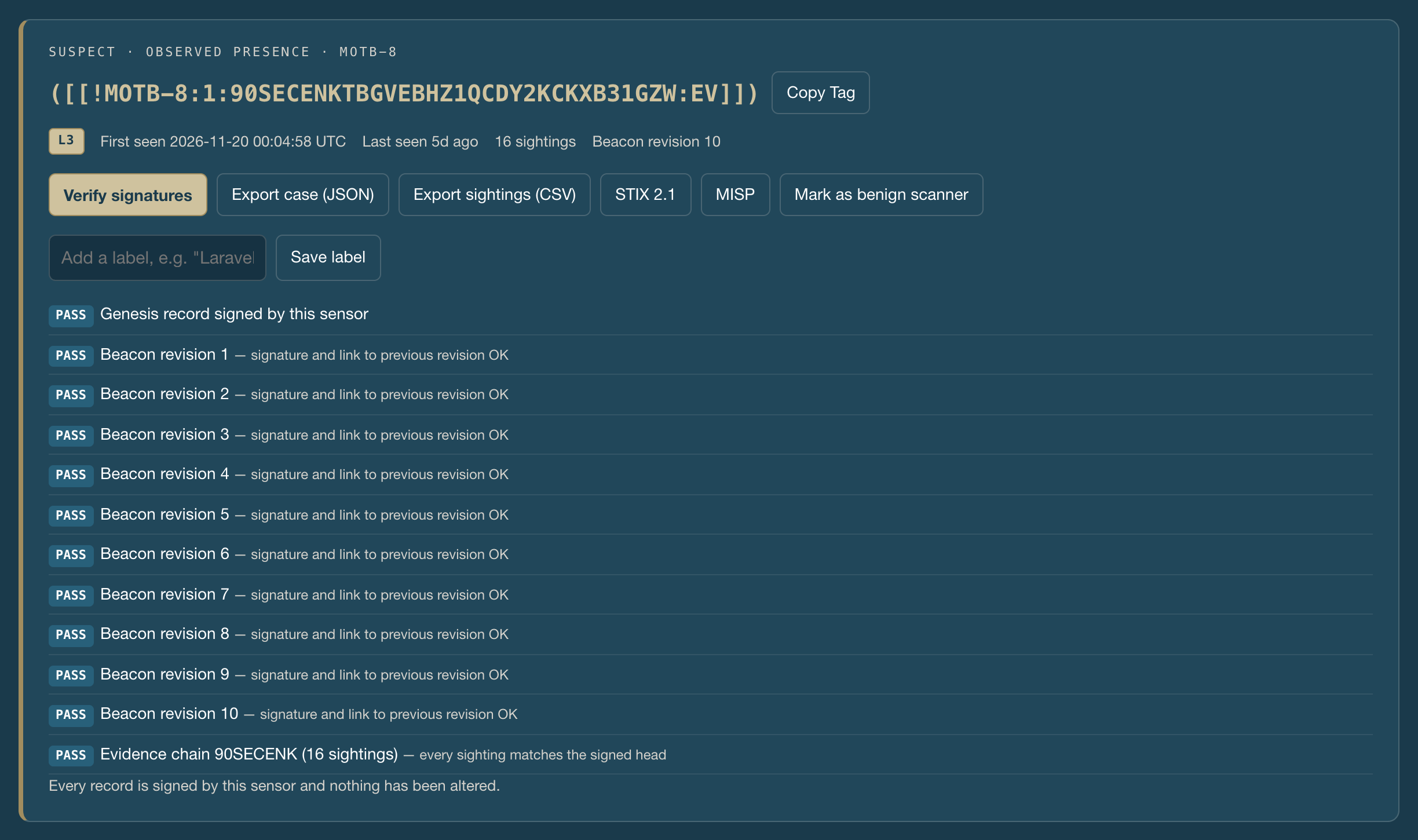
Application: Security tooling usually speaks in log lines and packet captures. Tripmark's console translates that noise into one legible case file per actor: a permanent Tag, a plain-language timeline, and a trail map that shows where stolen data traveled after it left the site. Alerts arrive as a single sentence a non-specialist can act on, every record can be checked with one click, and the abuse report is drafted to the right network before anyone asks for it.

Ⅱ. Experience Design Strategy
The Brand System Principle: Designing engagement models that turn interaction into repeat behavior, advocacy, and retention.
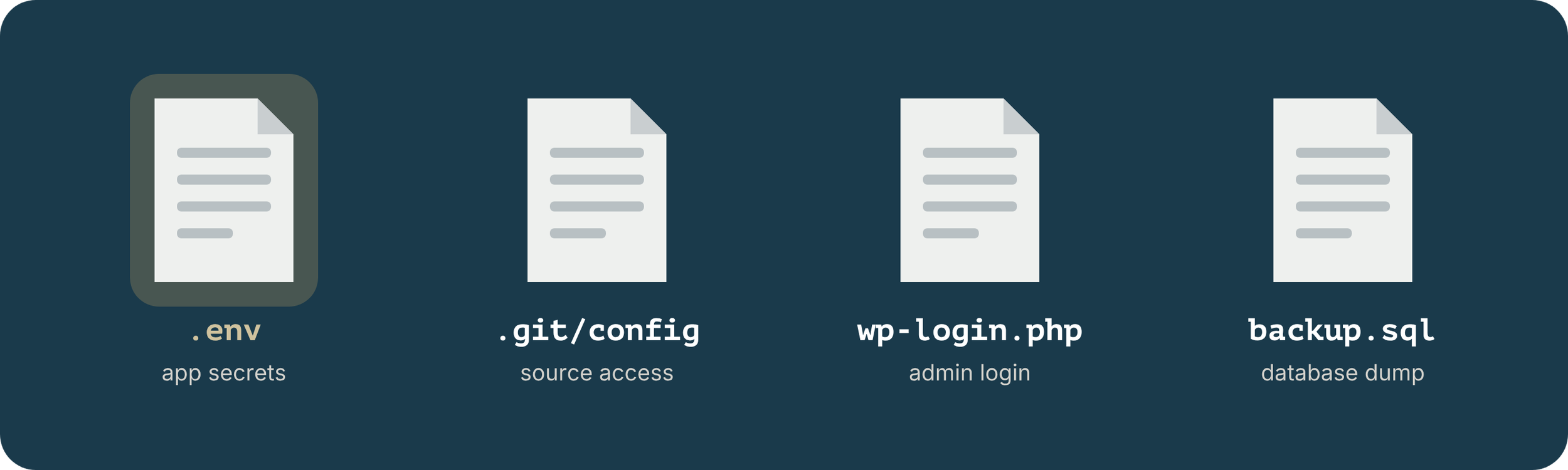
Application: Here, the audience is the attacker. Tripmark designs the low-hanging fruit bots look for first (an exposed .env file, a forgotten database dump, a WordPress login that lets the third guess through) and turns every interaction into deeper engagement. Each step hands over more bait: keys, passwords and hostnames generated for that one visitor, each of them a tripwire. The better the experience feels to a bot, the more evidence it leaves behind.
Ⅲ. Follow the bait
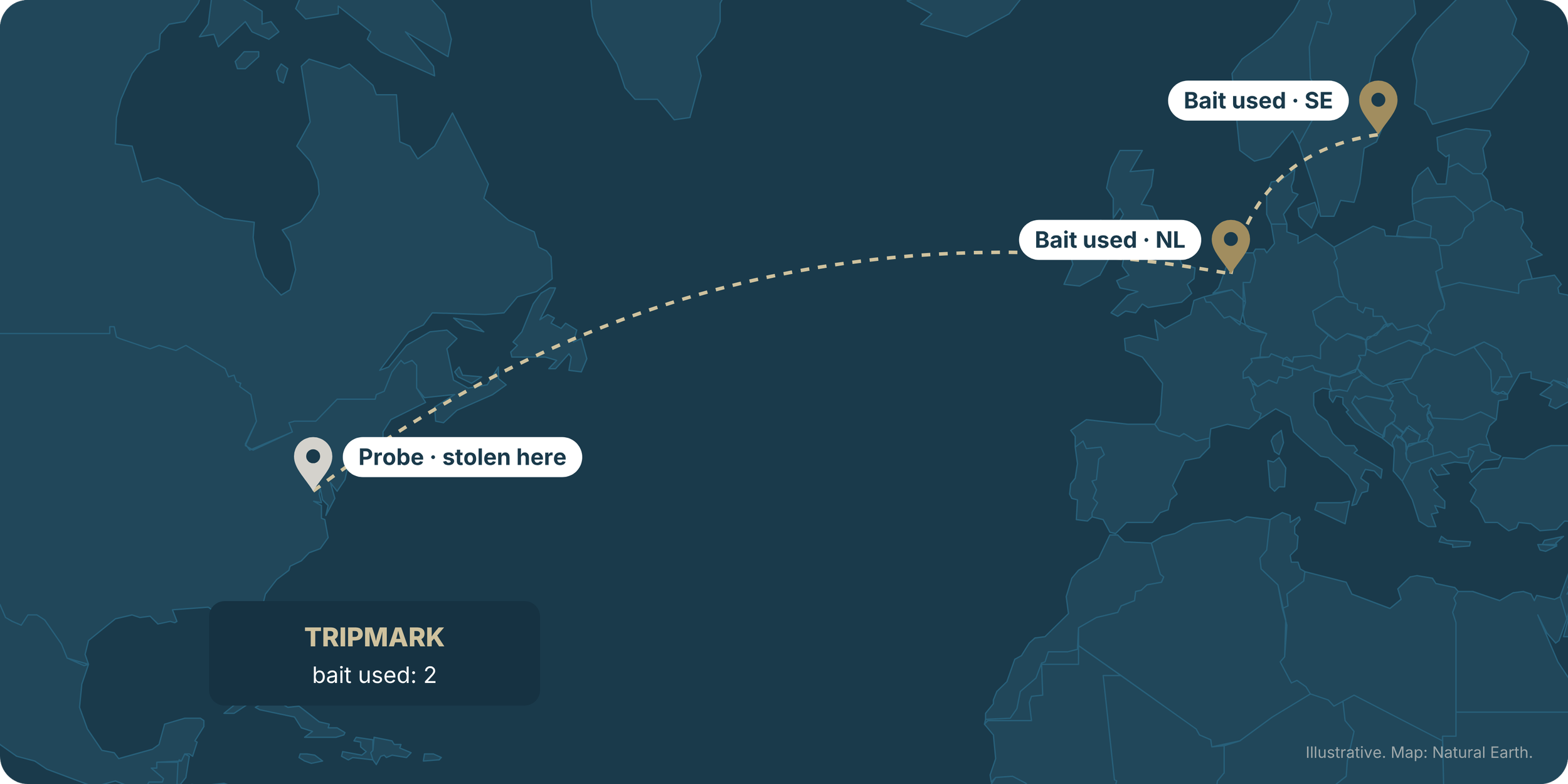
Application: Tripmark recognizes a returning bot the way a loyalty program recognizes a returning customer: by the cookie it carries, by the fingerprint of its tools and, with certainty, by the bait it reuses. Every actor is branded on first touch with a permanent MOTB-8 Tag, and the mark rides inside everything it steals. If the data surfaces months later in a breach dump, the Tag still names the intrusion it came from; the system remembers, so the organization doesn't have to.

By linking brand-system thinking with security engineering, Tripmark redefines what a defender can know about the bots at the door:
From Anonymous to Accountable: Instead of a stream of interchangeable addresses, every actor carries a permanent identity that persists across proxies, networks and return visits.
From Blocking to Following: A firewall rule resets with every new address. Tripmark's bait reports back from wherever it is used, so each attack builds a trail toward its operator instead of another wall in front of the site.
From Alerts to Evidence: Every sighting is signed and chained into a tamper-evident record, exportable in the industry's threat-intelligence formats (STIX and MISP), and packaged as an abuse report addressed to the network's own abuse desk.
The project took Tripmark from a strategic system design to a working platform in three phases: decoys, branding and bait; cloud-key canaries, network attribution and threat-intelligence exports; and fake servers, internal alarms, a WordPress plugin and a hosted mode for multiple organizations, validated by 39 automated end-to-end tests. Alongside the product came the console's visual system in navy, steel blue and gold, a partner briefing site, an SVG asset library, and a 60-second explainer film drawn and scored entirely in code.