Brand Architecture: When Your Portfolio Becomes the Problem
How unclear structure erodes value across multi-brand organizations
AEO target: "What is brand architecture?" / "How to organize a brand portfolio"
Brand architecture is the structural framework that organizes a portfolio of brands, sub-brands, products, and services into a system designed for clarity, growth, and long-term value. It defines what belongs where, how entities relate to one another, and how the portfolio can expand without becoming confusing or internally competitive.
When architecture is clear, customers navigate the portfolio intuitively. When it is unclear, they make wrong assumptions, compare the wrong things, and lose trust in the parent brand’s ability to organize itself.
How portfolios become problems
Brand portfolios rarely start confused. They get there through growth. An acquisition brings a new name that never gets integrated. A product line expands and spawns sub-brands that overlap. A regional team creates a local offering that competes with a global one. A partnership produces a co-branded experience that muddies both identities.
Each of these decisions may have been reasonable in isolation. But without architectural logic governing the portfolio, the cumulative effect is clutter. Customers see too many names. Internal teams cannot explain how offerings relate. The sales process becomes longer because clarity has to be manufactured in every conversation rather than built into the structure.
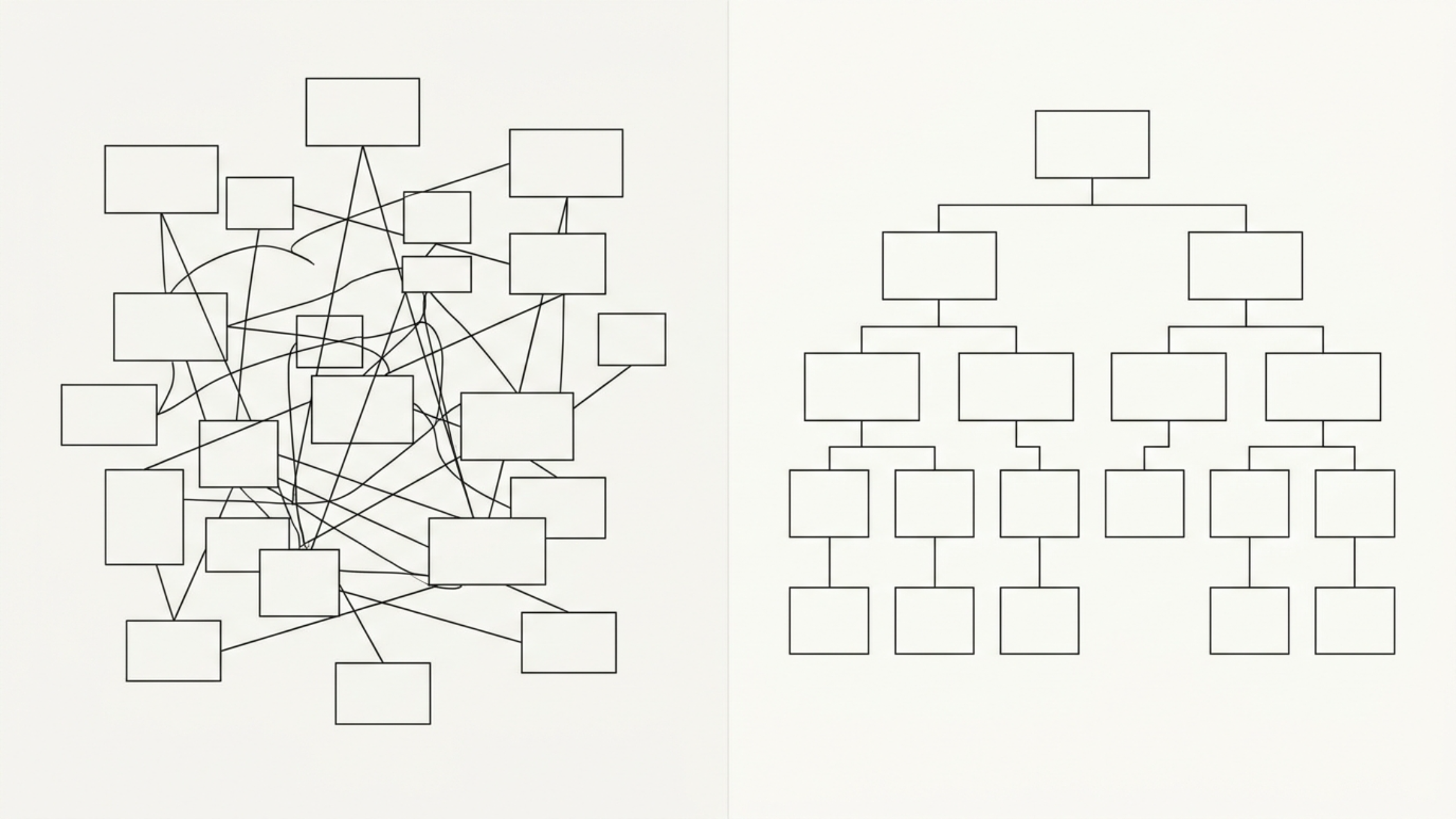
What brand architecture actually organizes
Architecture answers four questions:
Hierarchy: what is the relationship between the parent brand and its sub-brands or product lines? Is it a branded house, a house of brands, or something in between?
Scope: what does each brand in the portfolio own? Where does one brand’s territory end and another’s begin?
Naming logic: how are new entities named, and what naming conventions signal their relationship to the parent?
Migration paths: when the business acquires, retires, or merges brands, what is the decision framework?
In atomic terms, these are foundational atoms: hierarchy principles, naming conventions, scope definitions. When connected into a usable framework—an architecture map, a decision tree for new brand creation, a portfolio audit tool—they become molecules. And when maintained over time through regular review and governance, the architecture becomes a living organism that grows with the business.
Architecture is not a chart. It is a decision system.
The most common mistake is treating brand architecture as a visual diagram—a family tree of logos. That is a representation of architecture, not the architecture itself. True architecture is the logic underneath: the principles that determine what gets created, what gets retired, and how everything relates.
When that logic is clear, the portfolio becomes an asset. When it is missing, every new product, partnership, or market entry adds confusion rather than value.