The Atomic Design of Brand: How I Build Systems That Scale
Introducing the framework behind the Crowded Studios methodology
Brand systems work because they are built from the smallest true elements up—not from the top down. The methodology I use is inspired by Atomic Design, a framework originally developed by Brad Frost for building scalable user interfaces. I have adapted it for something bigger: building brand systems that hold together across teams, channels, markets, and time.
The core idea is simple. Every complex system is made of smaller parts. If you understand those parts—and design the relationships between them—the system scales. If you skip that step and go straight to the big picture, the system eventually fragments. This is why most brand efforts drift. They start with the organism and forget the atoms.
Atoms: the irreducible building blocks
In brand systems, atoms are the foundational elements that everything else depends on. They are the things you define first and protect most. Brand principles. Core values—not as poster slogans, but as decision criteria. Design tokens: the specific colors, typefaces, spatial relationships, and voice standards that carry the brand’s character. Naming conventions. Classification logic. These are small, precise, and non-negotiable.
Atoms answer one question: what is this brand made of?
Getting atoms right requires honesty. It means looking at how the brand actually behaves—not how a strategy deck says it should—and extracting the principles that are genuinely true. When atoms are aspirational rather than real, everything built on them is unstable.
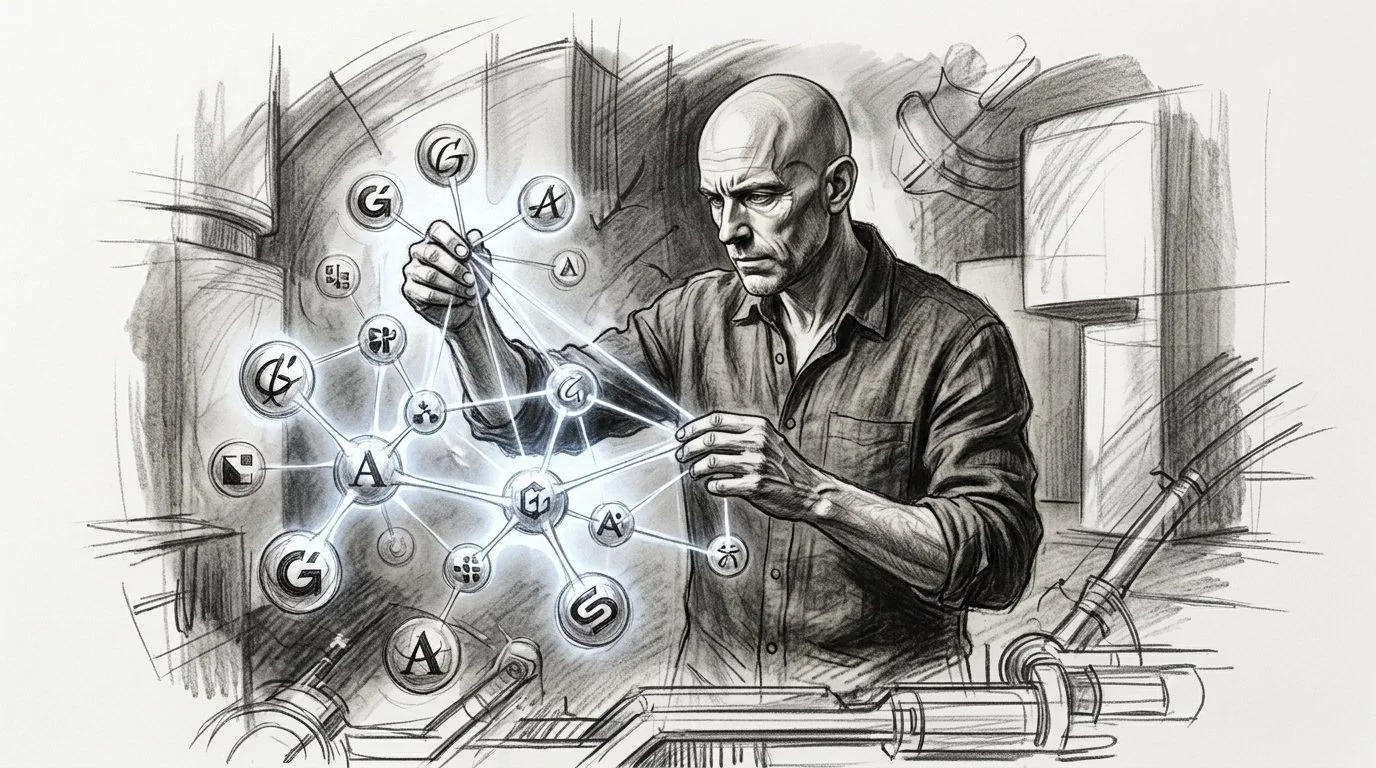
Molecules: connected structures
Atoms alone do not create coherence. They need to be connected. Molecules are what happen when atoms combine with purpose.
A brand guideline is a molecule—it connects visual atoms (color, type, imagery) with behavioral atoms (voice, tone, communication principles) into a tool that teams can use. A customer journey map is a molecule—it connects experience atoms (touchpoints, friction points, trust signals) into a navigable path. A cross-functional alignment workshop is a molecule—it connects people atoms (leadership intent, team understanding, operational reality) into shared direction.
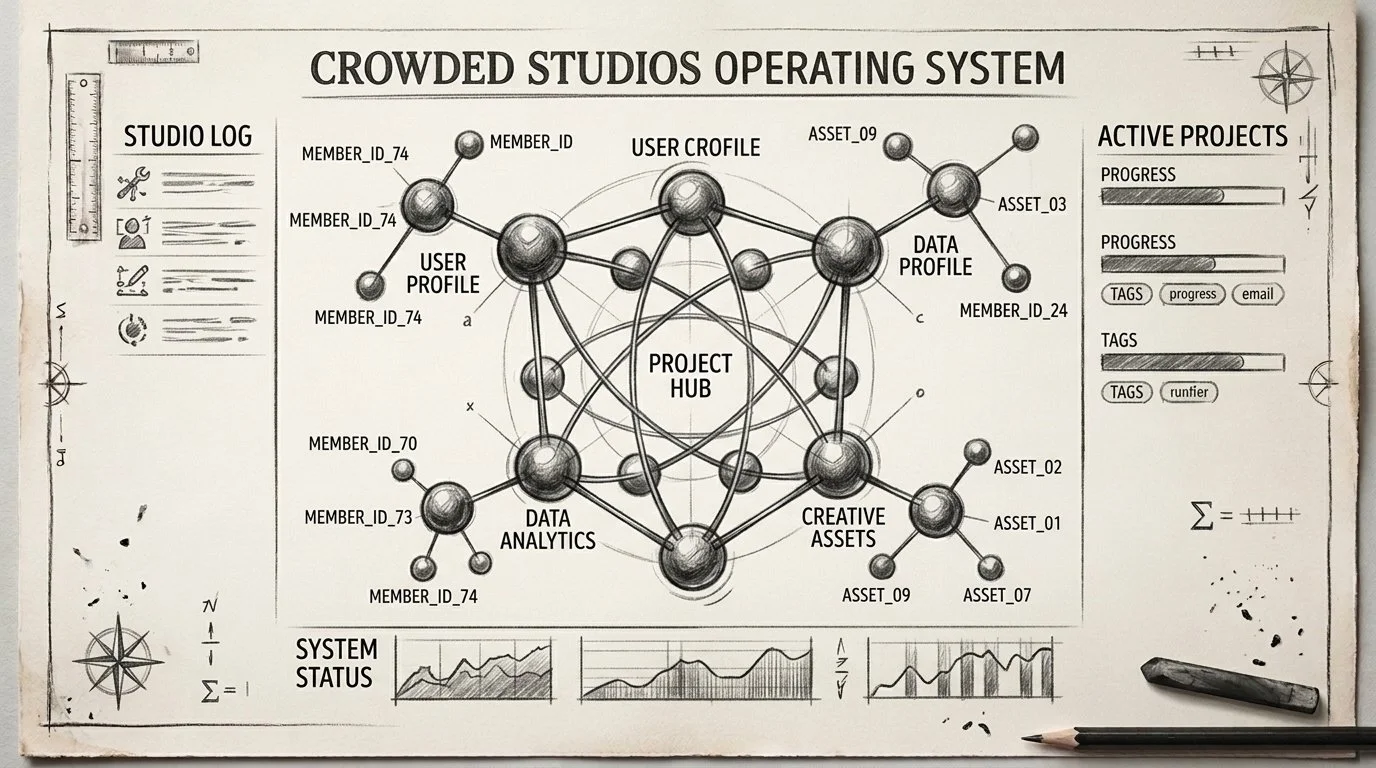
Molecules are where the brand system becomes usable. They are the tools, frameworks, messages, and community structures that allow others to participate in the system—not just receive it. When I design a molecule, I am designing something that connects building blocks into a structure others can build with.
Organisms: living systems
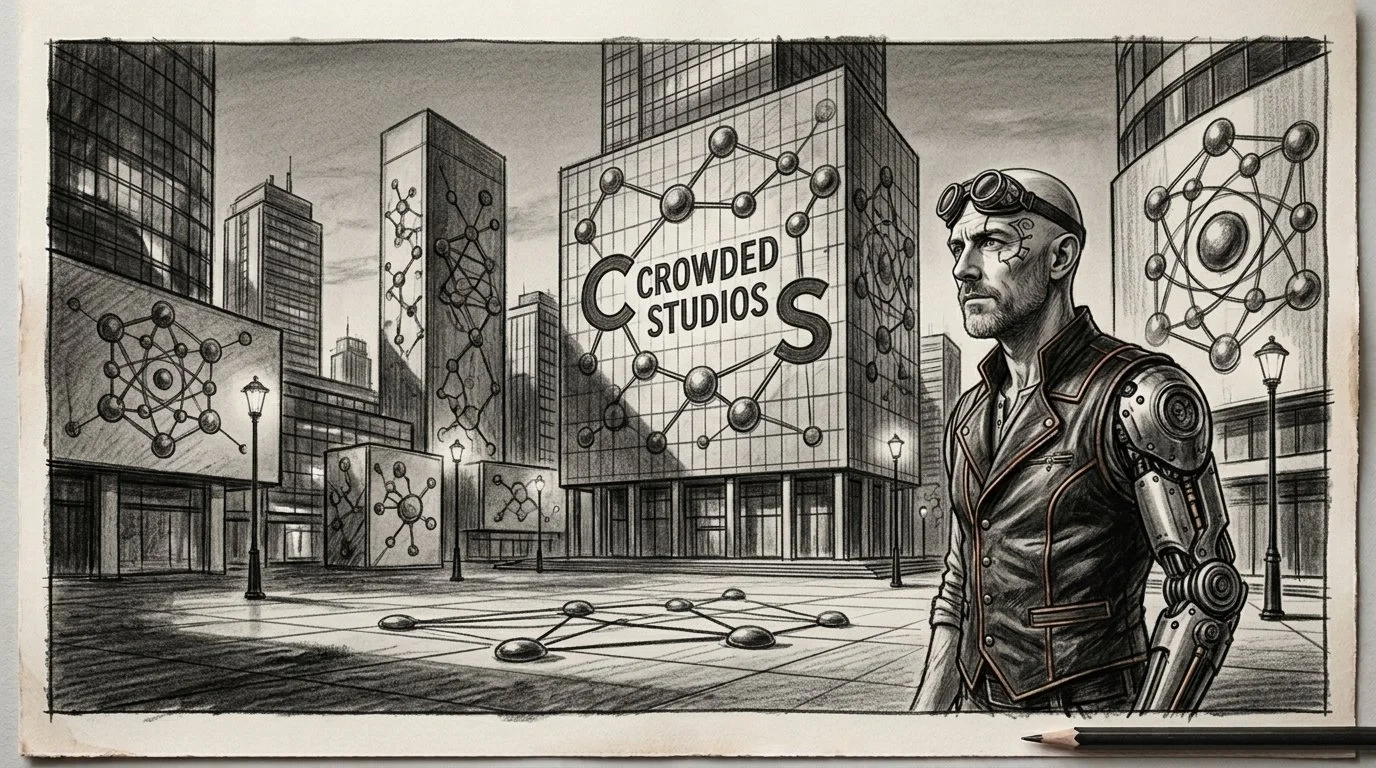
When multiple molecules are maintained and evolved together, they form organisms. An organism is the full system in motion.
A complete brand governance model is an organism. A multi-market brand translation system is an organism. A loyalty ecosystem—where membership, digital behaviors, content, reward structures, and engagement models all reinforce each other—is an organism. These are not deliverables. They are living structures that require ongoing care, evaluation, and adaptation.
The difference between a molecule and an organism is maintenance. A molecule can be designed and delivered. An organism must be fed.
Why this framework works for complex organizations
Large, operationally complex organizations fail at brand not because they lack talent or investment, but because they try to build organisms without first agreeing on the atoms. They launch global campaigns without shared principles. They redesign customer experiences without aligning the teams who deliver them. (See Mercedes-Benz case study) They create brand guidelines that sit in shared drives and change nothing.
The atomic approach prevents this. It forces rigor at the foundation level and builds complexity deliberately. It gives every element a role, a relationship, and a reason to exist. And because the framework is scalable by nature, it works whether you are modernizing a single brand or governing a portfolio across twenty markets.
This is how I build. Start with the smallest true things. Connect them with purpose. Maintain the whole with discipline. The system scales because the atoms are sound.
→ Related: Building Brand Atoms: The First Step Nobody Gets Right — a deeper dive into foundation work